The Wave
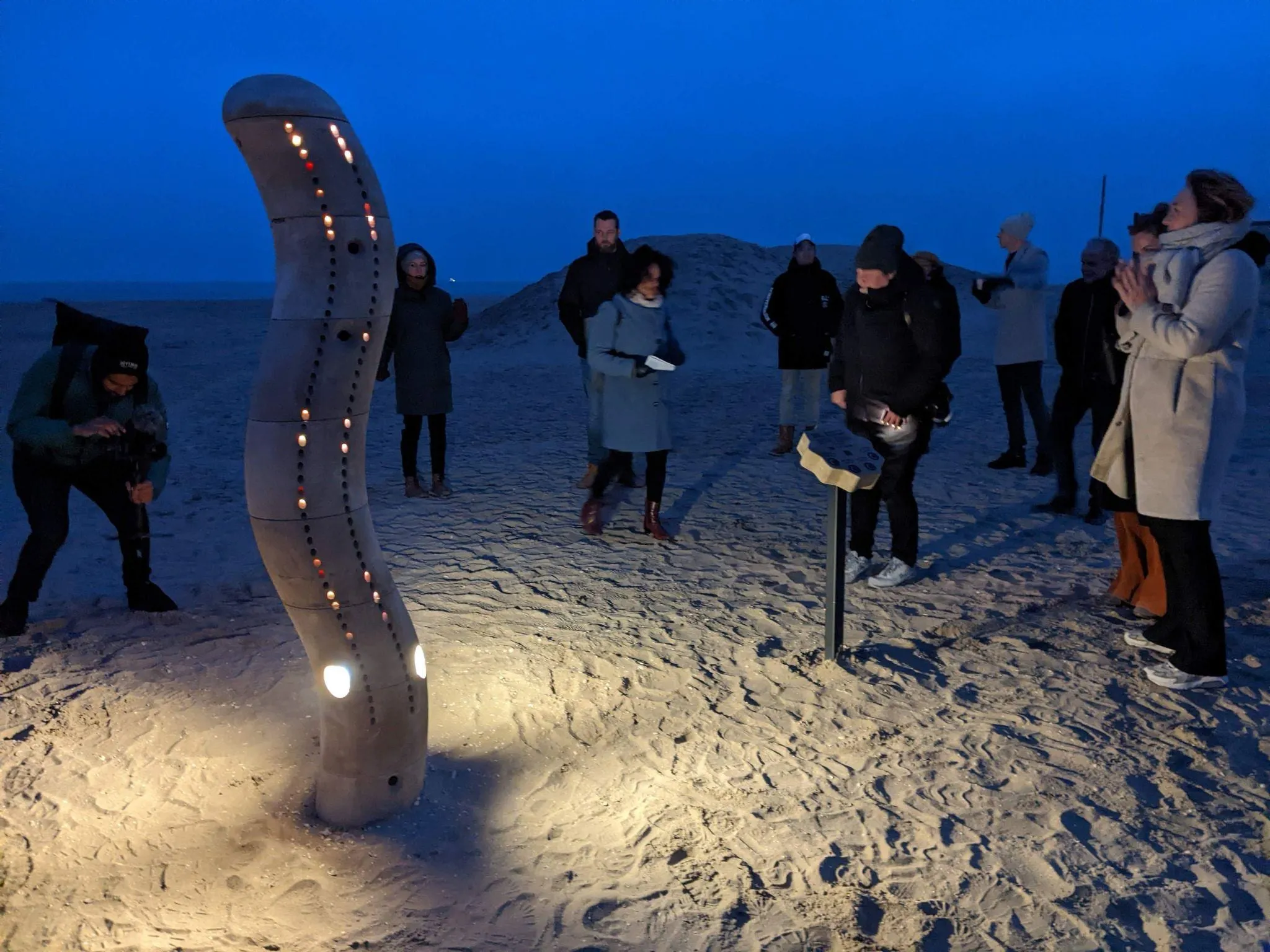
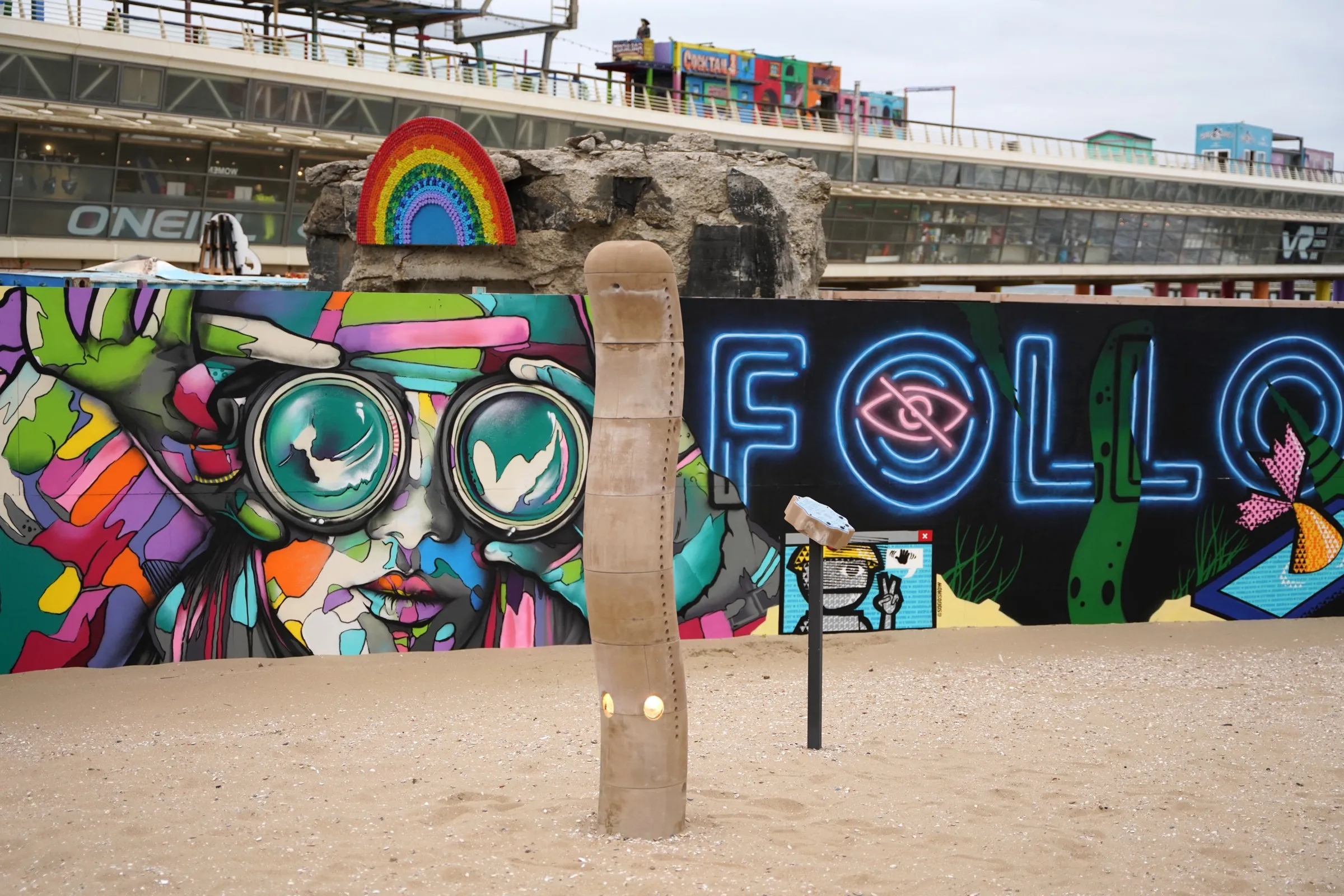
A sand-printed sculpture that turns a stretch of beach into an exercise game.
At a glance
- Form
- 3D sand-printed, one-off architectural scale
- Sensing
- Movement sensor array — no cameras, no images recorded
- Environment
- Open beach — salt air, sand ingress, full temperature swing
- Supervision
- None. Unattended public use since installation
- Interaction
- Guided exercises and timed games, via a companion post
Who it is for
- Municipalities placing something on a beach, park or waterfront
- Sites where cameras are politically or legally impossible
- Programmes aimed at people who walk past normal outdoor gym equipment
The problem it was built for
Public exercise equipment has a self-selection problem. It is usually built for people who are already fit and already confident — so the people who would benefit most walk straight past it.
The Municipality of The Hague wanted the opposite on Scheveningen Sports Beach: something a nine-year-old and a seventy-year-old would both walk up to without hesitating, whatever their skill, strength or age.
Two constraints shaped everything
It had to sense people without watching them. The obvious way to build an interactive installation is a camera and some computer vision. On a public beach that is unacceptable — it turns play equipment into surveillance, and it makes the project a data-protection conversation instead of a sports one.
So: an array of movement sensors, no cameras, and no image ever recorded. Because it reads movement rather than identity, it behaves the same for whoever walks up, and every interaction stays anonymous by construction.
It had to survive a beach. Salt corrodes, sand gets into everything, the temperature swings, and nobody is supervising it. That constraint drove more of the engineering than the interaction design did.
Why sand printing
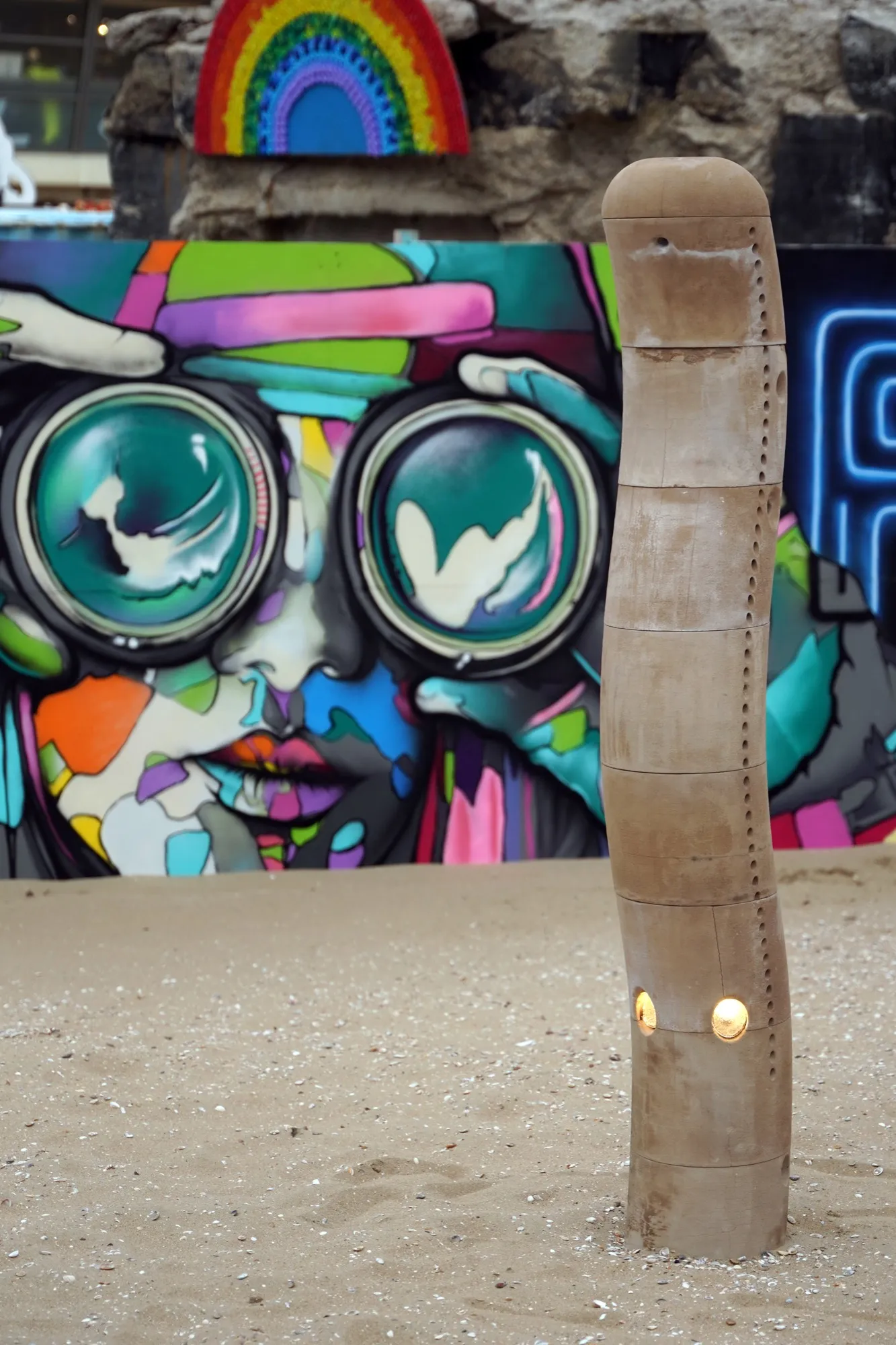
The sculpture is 3D sand-printed, which lets you make a one-off form with real presence rather than assembling something from standard parts that reads as municipal equipment. On a beach full of colour and noise, that is the difference between an object people approach and an object people ignore.
What it proved
The Wave settled the question that everything since has been built on: that a durable, sensor-driven, camera-free installation holds up to real, unsupervised public use.
That result is the direct foundation for CityGems — the same principle, spread across a whole city instead of one stretch of sand.