CityGems
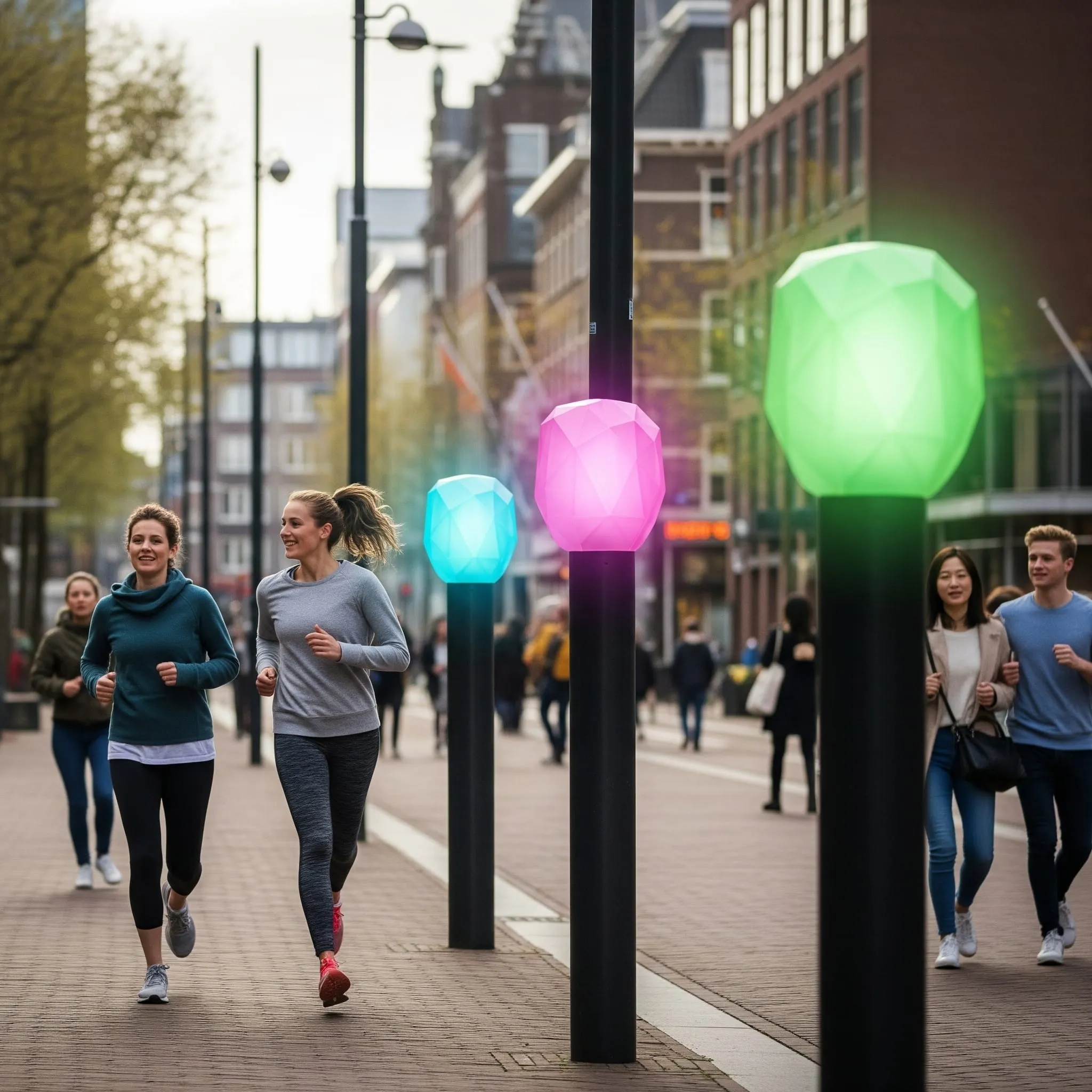
Gem-shaped light modules that clip onto what a city already has, and react when people move past.
At a glance
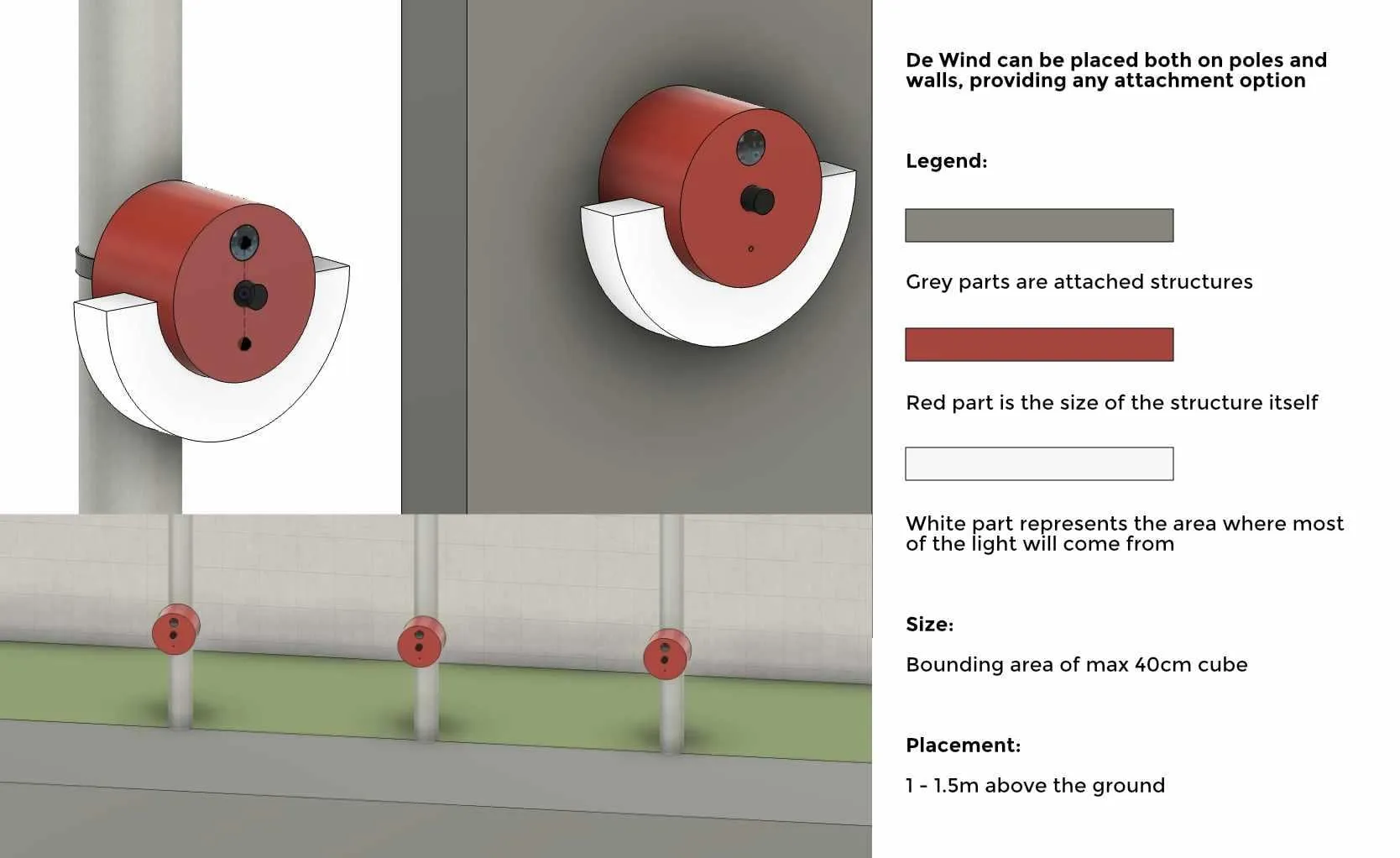
- Module size
- Weatherproof unit within a 40 cm bounding cube
- Mounting
- Non-invasive, to existing lampposts, walls and fences, 1–1.5 m above ground
- Sensing
- Time-of-flight distance plus passive motion radar — no cameras
- Networking
- Device-to-device radio, so a run can be timed across a whole chain
- Maintenance
- Each module reports its own status; faults are found without a patrol
- Audience
- Designed around 12–35 year olds
Who it is for
- Cities that want activity in overlooked corners without building anything new
- Sport organisations running routes, routes challenges or neighbourhood programmes
- Sites where digging, foundations or new poles are not on the table
The idea
The Wave proved a camera-free interactive installation survives real public use. CityGems takes that and spreads it across a city.
Gem-shaped modules clip onto lampposts, walls and fences that already exist. They react to movement with light and sound, and they talk to each other — so a line of them becomes a timed run, with splits at every module along the way. The point is to turn overlooked corners of a city into a social, gamified reason to walk, run and explore.
What makes it hard
You do not own the thing you are mounting to. A lamppost belongs to the city, carries its own cabling, and has to stay serviceable. Anything attached has to be non-invasive, safe, and acceptable to the people who maintain the street.
Every unit is somewhere inconvenient. One module on a bench is easy. Two hundred across a city means anything requiring a visit — a reset, a battery, a firmware update by cable — does not scale. Each module reports its own status, so maintenance is driven by data rather than by patrol.
It has to read as intentional. A street is visually noisy: bikes, bins, signage, graffiti, greenery. An object that looks like utility hardware either disappears into that clutter or reads as something to vandalise.
From bench to street
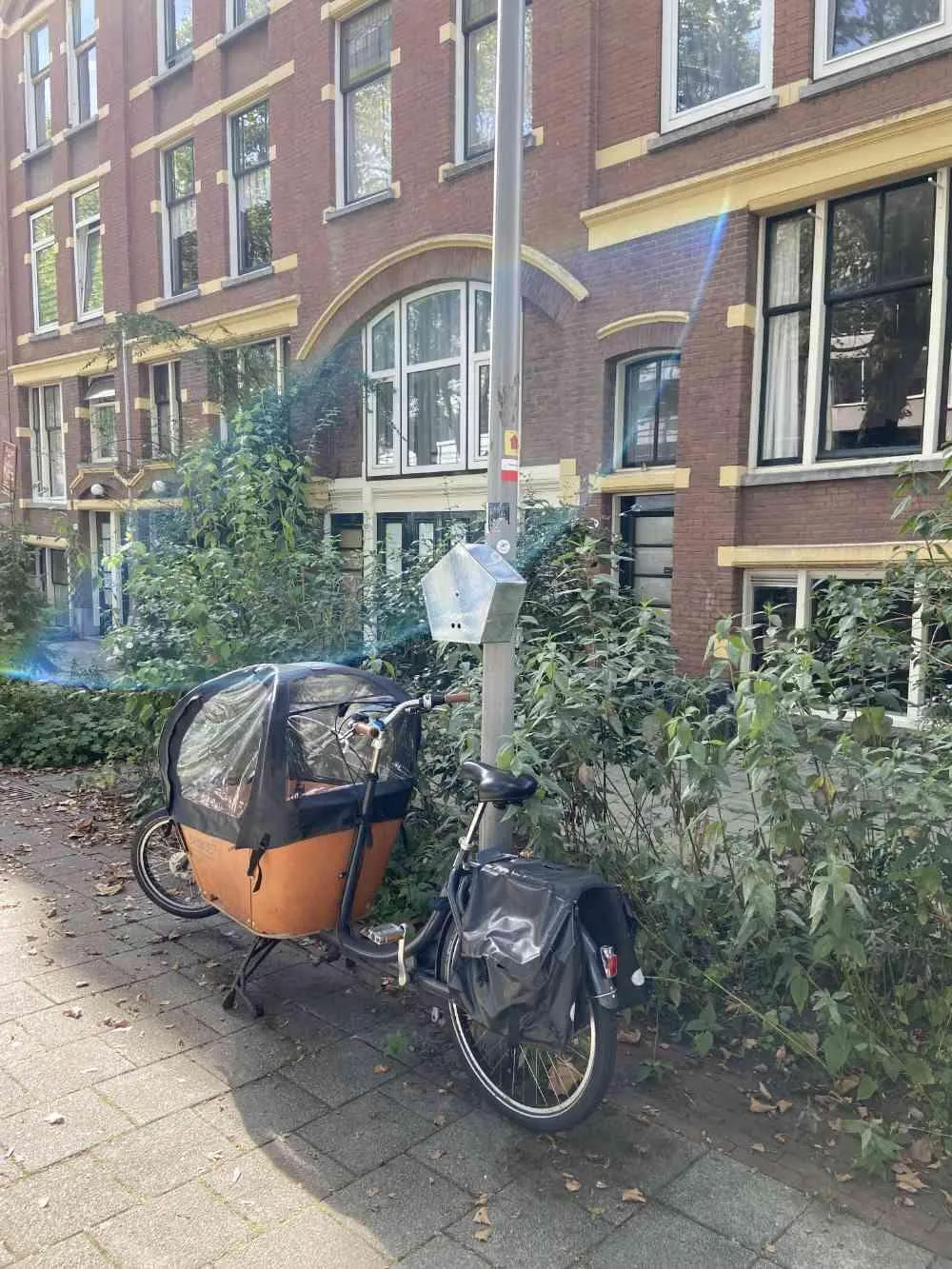
Early enclosures went straight onto Rotterdam lampposts — not to test the electronics, but to see how the object reads at street scale against real background clutter, and whether the mounting is honestly practical.
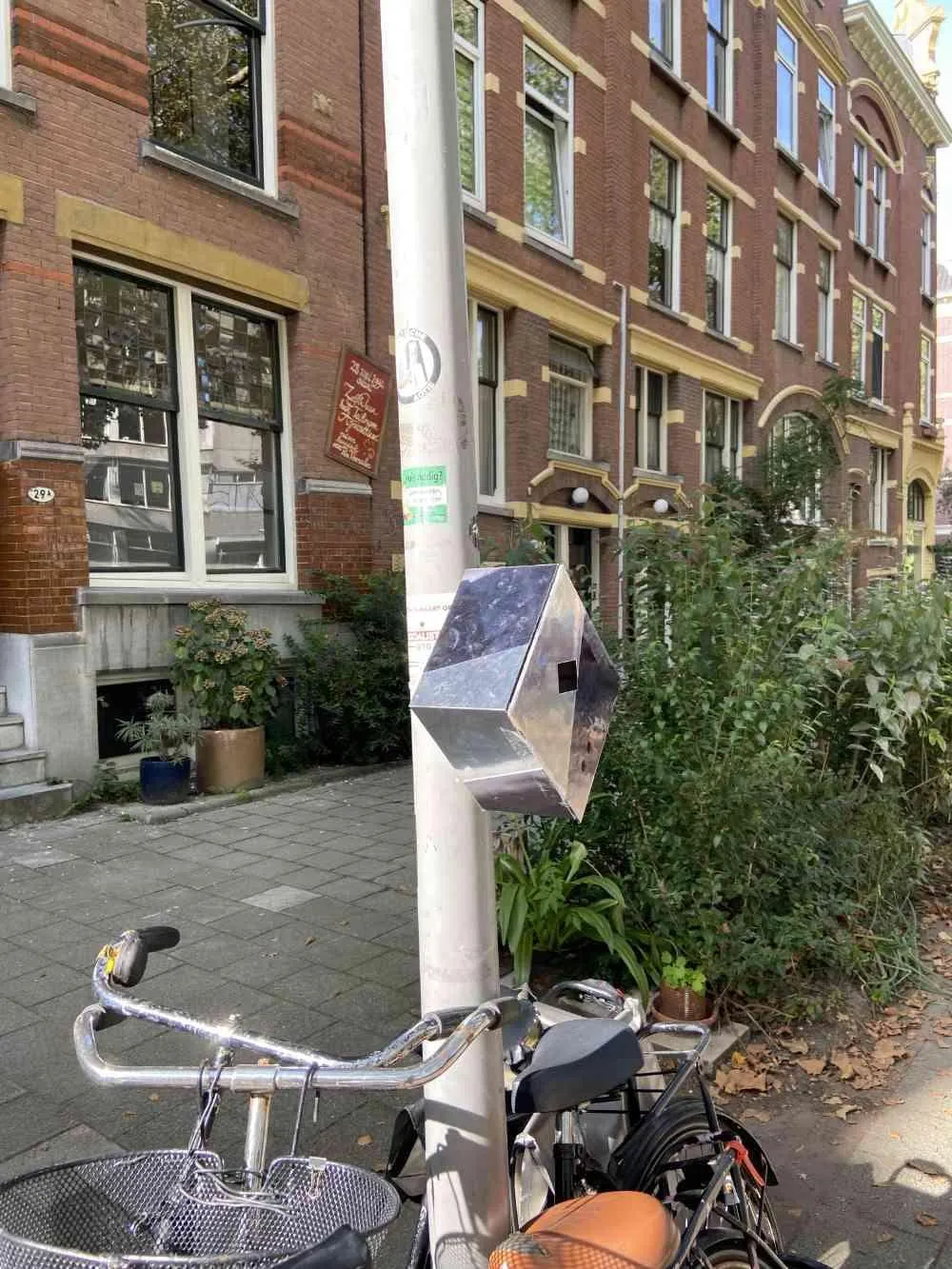
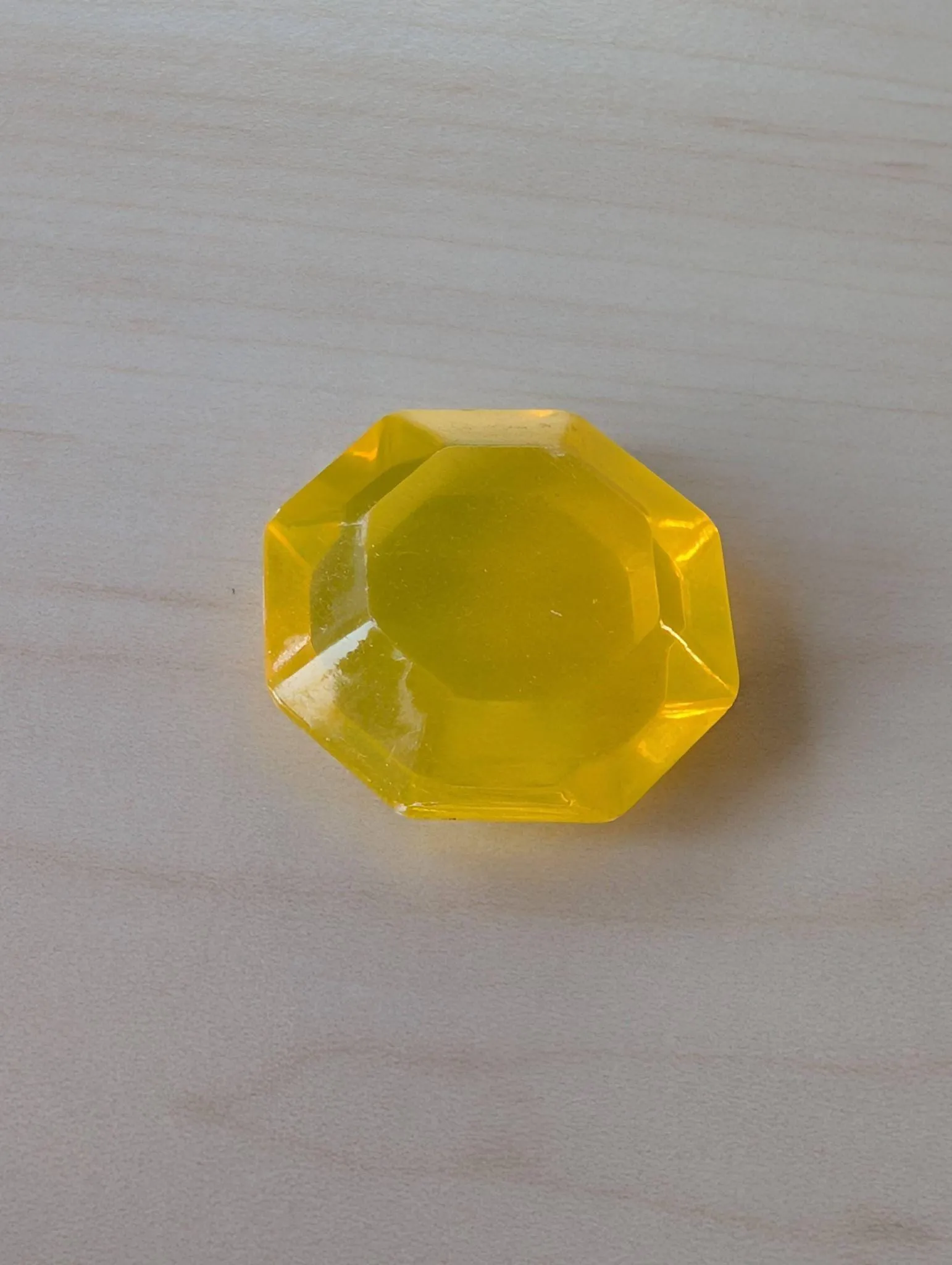
Physical shape tests worked out how the faceted form should catch light.
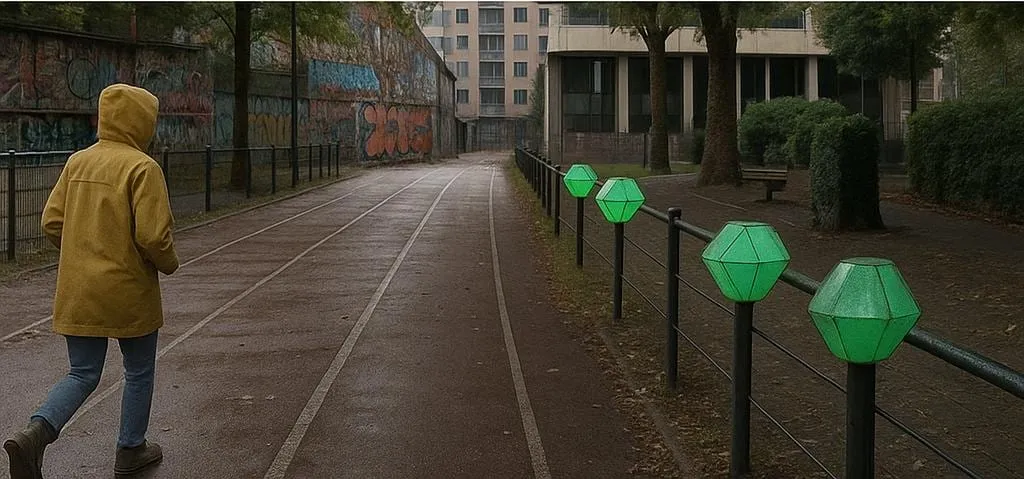
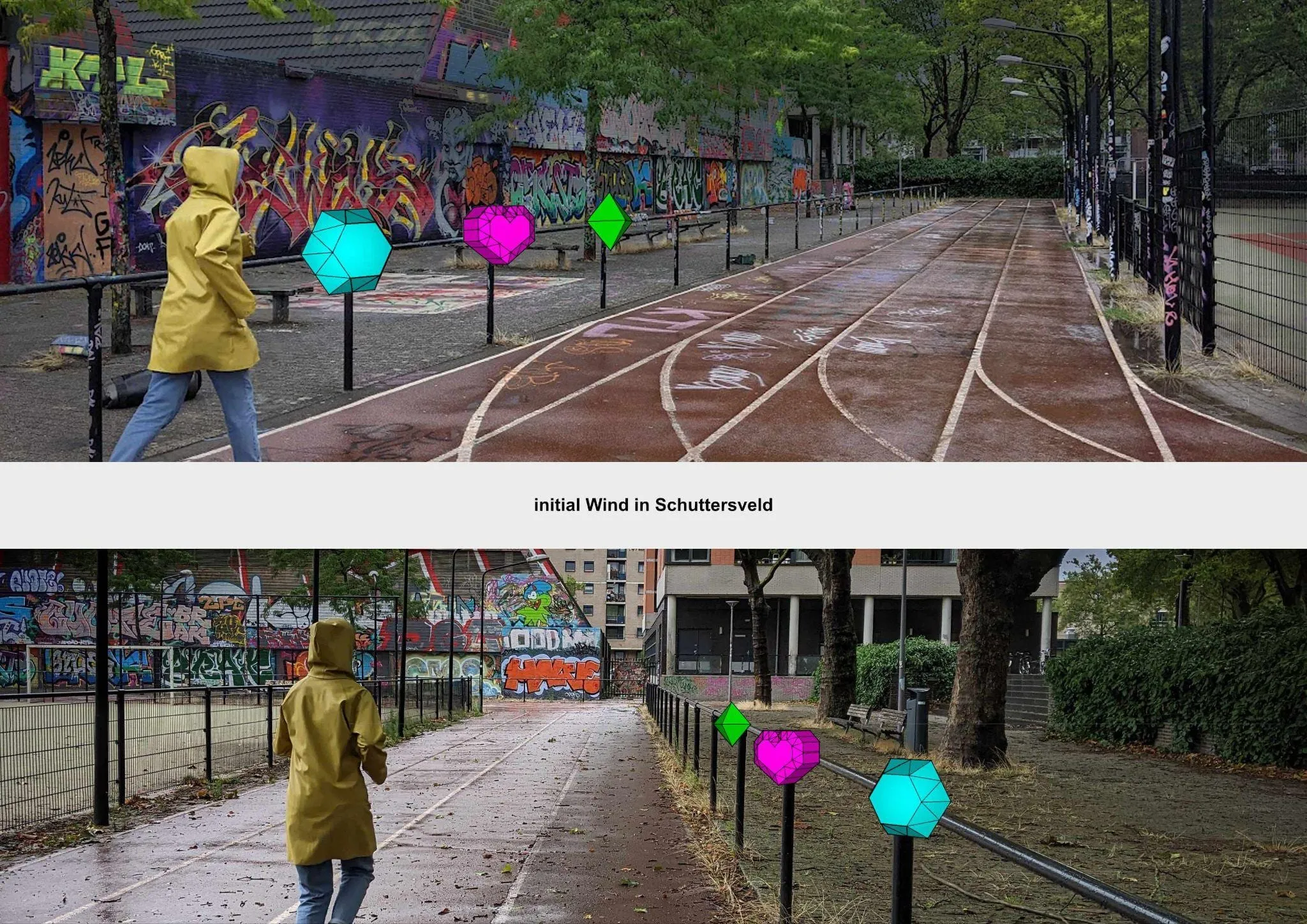
Concept placements along Schuttersveld were used to settle spacing, colour variety, and how the gems hold their own against graffiti and greenery.
The interaction itself was tuned on the bench first, on the reaction panel, before any of it was committed to an enclosure.
Built with THUAS
The LED and sensor core was prototyped with The Hague University of Applied Sciences, which gave students hands-on work building the interactive heart of the modules — and gave the project a second set of eyes on the electronics.
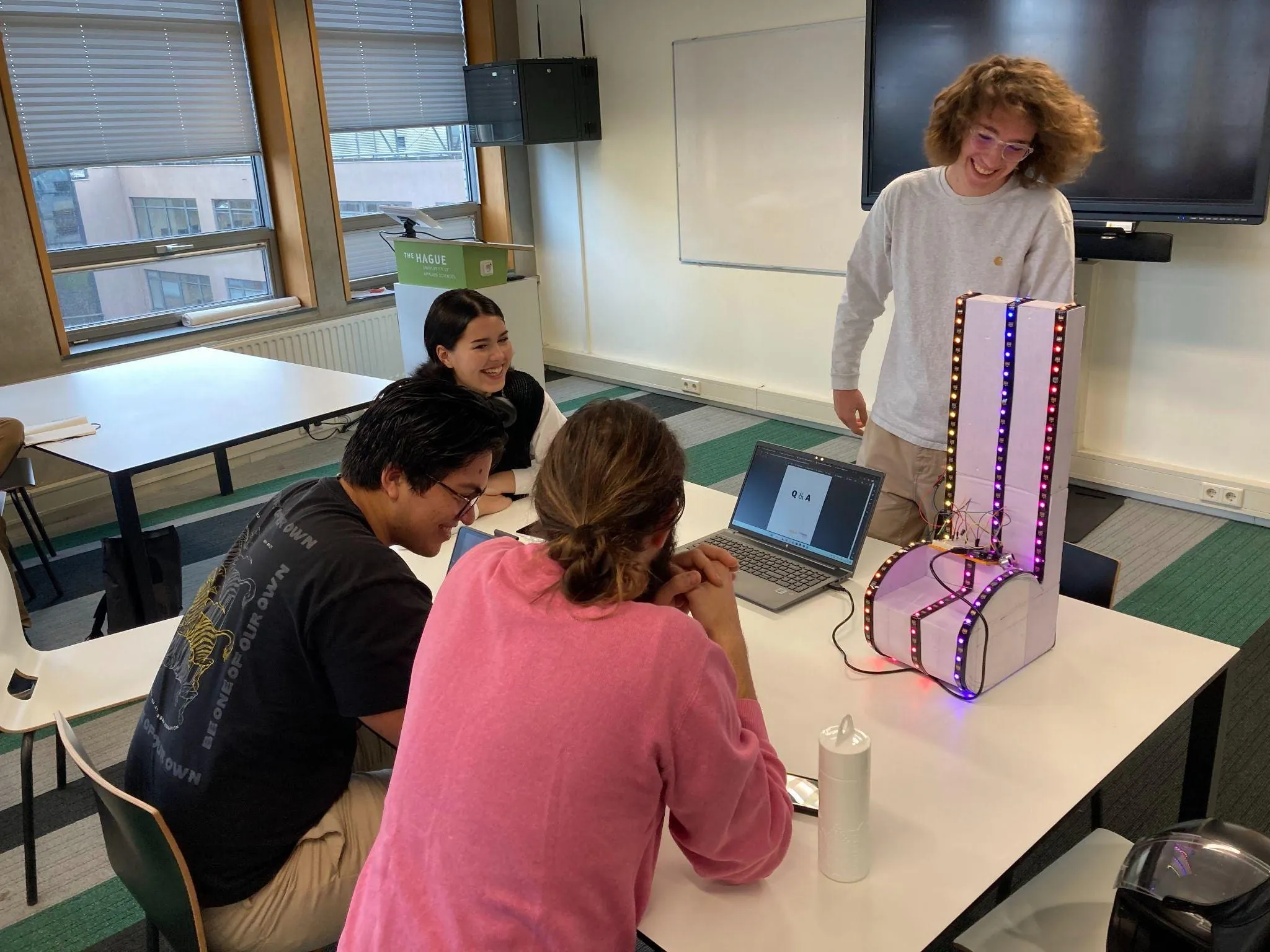
Where it stands
CityGems has been tested indoors at The Sun and informally on Teilingerstraat. Sportbedrijf Rotterdam has shown strong early interest, and Rotterdam’s city planners have affirmed the approach of mounting to infrastructure that is already there.
It is now moving toward pilot deployment. If you have a route, a park or a campus in mind, that is the conversation to have.