Interactive light for public space
LightMoves — Light installations that make public space move.
We build installations that use light to get people moving — on beaches, along streets, and in the minutes people spend waiting. Sensor-driven, camera-free, and engineered to stand outdoors unsupervised for years.
The problem
Most outdoor sport equipment is built for people who are already fit.
So the people who would benefit most from it walk straight past. A nine-year-old and a seventy-year-old both need to want to walk up without hesitating, and a pull-up bar does not do that.
Light does. It is visible from a distance, it invites rather than instructs, and it makes a response to movement immediate and obvious. It reads as play instead of exercise — which is the entire point, because the thing that makes people move is wanting to.
What we make
Three installations
One installed and in daily public use, one heading into pilot, one ready to be built around the right site. They share the same sensing, the same outdoor engineering, and the same rule about cameras.
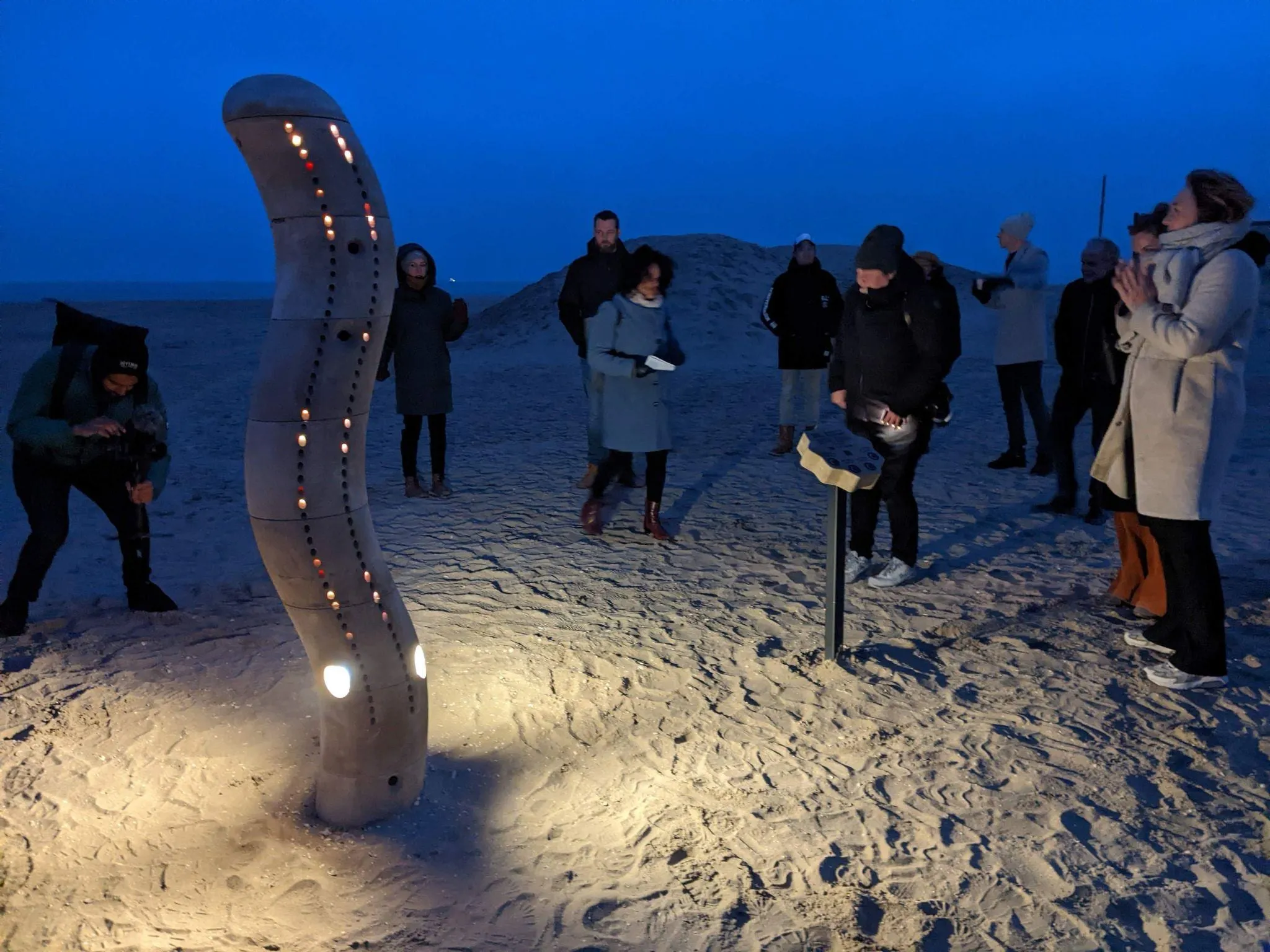
The Wave
A sand-printed sculpture that turns a stretch of beach into an exercise game.
Beaches, parks, waterfronts
See the installation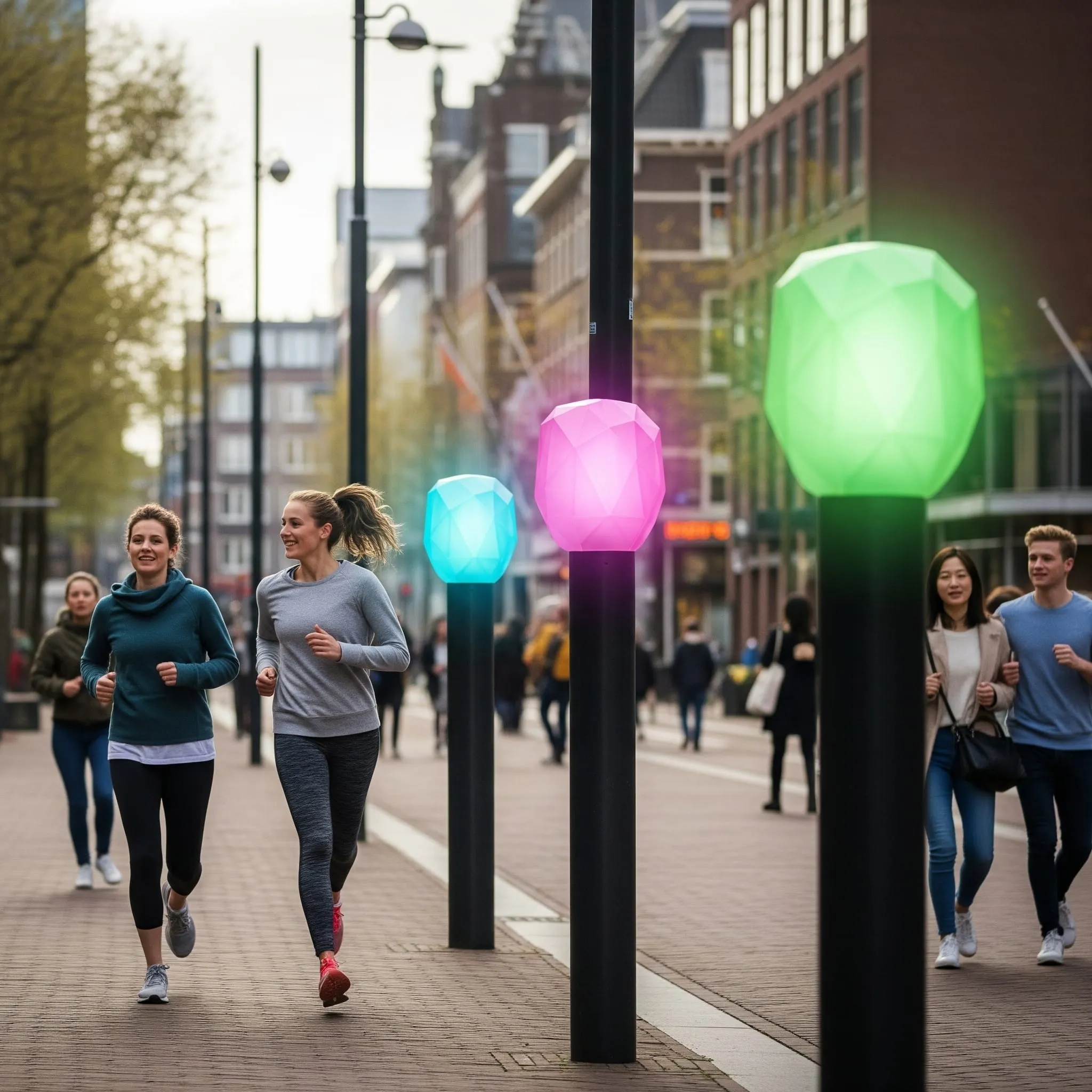
CityGems
Gem-shaped light modules that clip onto what a city already has, and react when people move past.
Streets, running routes, parks, campuses
See the installation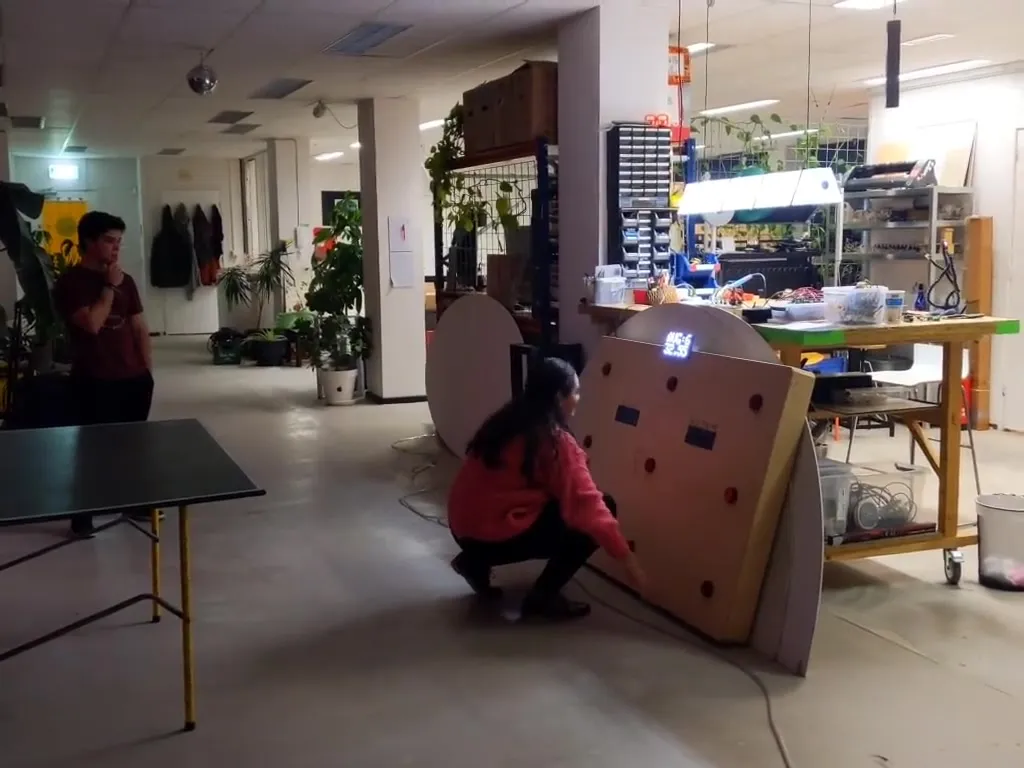
Interval
A wall of lit targets for the places people are already standing still.
Station platforms, waiting areas, sports halls, physio and clubs
See the installationHow we build
Four rules, learned the expensive way.
No cameras. Ever.
Every installation reads movement, not identity. Nothing is filmed, nothing is stored, and no interaction can be traced to a person. That takes the data-protection conversation off the table before it starts.
It mounts to what is already there.
Lampposts, walls, fences, a stretch of sand. No foundations, no digging, no new poles. Non-invasive by design, and serviceable by the people who already maintain the street.
Nobody has to supervise it.
Salt air, sand, rain, temperature swing, and no staff on site. The outdoor engineering is the hard part of this work, and it is the part with the most hours in it.
It tells you how it is doing.
One unit on a bench is easy. Two hundred across a city is a maintenance problem. Each module reports its own status, so faults are found from a dashboard rather than a patrol.
Proof
Already outdoors, already public.
The Wave has been standing on an open beach, unsupervised, since it was installed. That is the only evidence that actually matters for work like this.
-
Municipality of The Hague
Commissioned The Wave for Scheveningen Sports Beach, with Beach Management.
-
Sportbedrijf Rotterdam
Partner on CityGems, now moving toward pilot deployment.
-
City of Rotterdam
Planners affirmed the approach of mounting to infrastructure that already exists.
-
THUAS
The Hague University of Applied Sciences prototyped the LED and sensor core with us.
How a project runs
Site, bench, one unit outside, then scale.
- 01
Walk the site
Where people already stand, walk and wait — and where they do not. Half the design decisions are settled by an hour on location.
- 02
Tune the interaction first
On a bench, before any enclosure exists. Latency, difficulty and whether a stranger understands it without a sign are things you can only find by playing.
- 03
Put one outside
A single unit in the real location, in real weather, with real strangers. This is the step that tells you what the drawings could not.
- 04
Scale it
Roll out the network, connect the fleet reporting, and hand over something your maintenance team can actually keep running.
Contact
Got a site in mind?
A street, a park, a platform, a sports hall, a stretch of beach. Tell us where it is and what you want people to do there, and we will tell you honestly whether one of these three fits or whether it needs to be something else.
LightMoves is a product line by hola.studio, a prototyping partner for hardware, software and AI.