Interval
A wall of lit targets for the places people are already standing still.
Working title. This one does not have its final name yet — it grew out of the bench rig the other two installations were designed on. Candidates so far: Interval, Dwell, Standby.
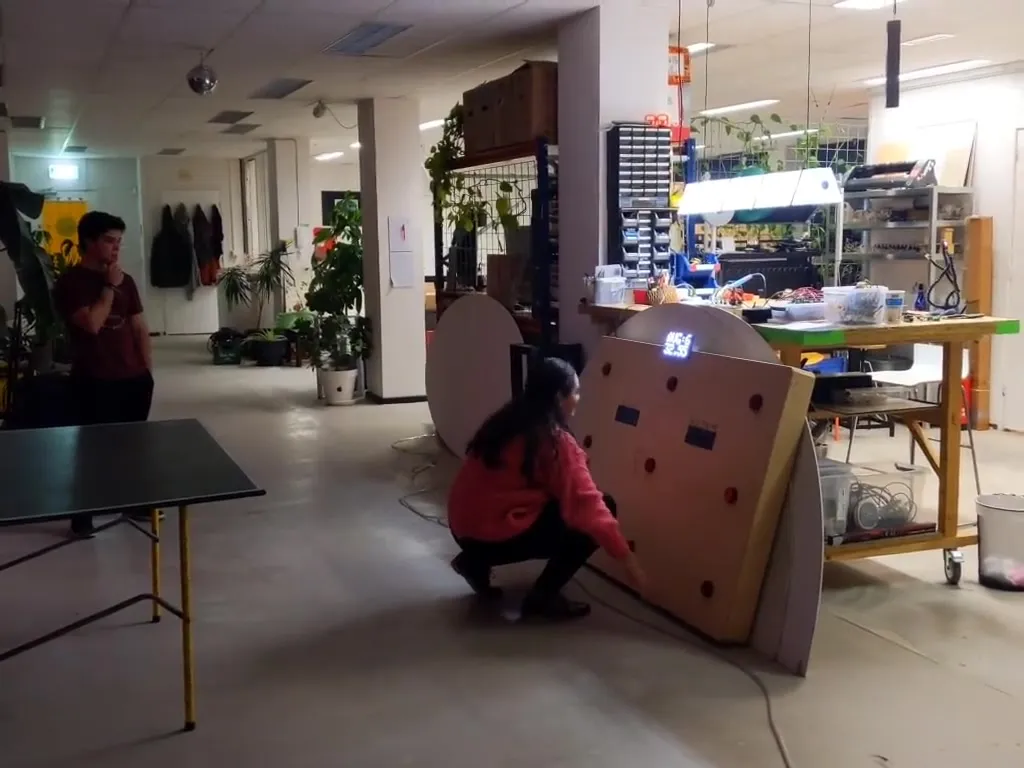
At a glance
- Format
- Wall-mounted panel of lit, sensor-backed targets
- Interaction
- Hit the lit target, it moves. Reaction time, sequences, two-player
- Session length
- Built around 30 seconds to 4 minutes — the length of a wait
- Sensing
- Same camera-free sensing as the outdoor work
- Siting
- Indoor, supervised or semi-supervised space
Who it is for
- Station and transit operators with platforms and concourses full of waiting
- Sports facilities wanting a warm-up and reflex station that needs no staff
- Physio, clubs and schools measuring and training reaction time
- Anywhere with a blank wall and a queue in front of it
Where it came from
Every LightMoves installation hangs on the same question: when a person moves, what should the light do, and how fast?
That is cheap to answer on a bench and expensive to answer on a beach. So it got answered on a bench — a panel of lit targets wired to the same class of sensors and drivers the outdoor installations use, built purely to tune the interaction before committing it to an enclosure.
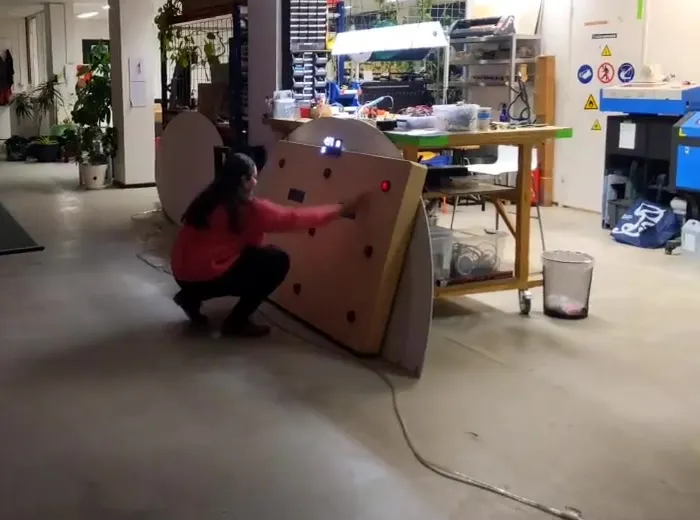
Then people kept playing with it. Not to test it — just because it was there and it was fun. That is the whole product thesis.
The case for putting it in a station
The average wait for a train is a few minutes of standing still, looking at a phone. It is dead time, and there is an enormous amount of it: every platform, every day, in every station.
A reaction panel fits that gap exactly. A round is short enough to abandon when the train arrives, it needs no changing room, no kit and no instruction, and it works just as well for one person killing time as for two people competing.
The same argument holds anywhere there is standing around with a wall next to it — a sports hall before practice starts, a physio waiting room, a school corridor.
What we already know it has to get right
The bench rig exists to answer exactly the things you cannot judge from a specification:
- Latency. Feedback that arrives 200 ms late feels broken even when every component is working correctly. You find that threshold by playing with it, not by reading a datasheet.
- Difficulty. Too easy is boring, too hard is humiliating, and both drive people away from a public installation within one round.
- Legibility. Whether someone walking past understands what to do without a sign, an instruction or a member of staff.
Where it stands
The interaction is proven and the sensing is shared with hardware already running outdoors unsupervised. What does not exist yet is the product: the enclosure, the mounting, the vandal- and cleaning-resistance a public indoor space demands, and the durability testing that goes with it.
That work is scoped and ready to start. A site to build it around is the useful next thing — a station, a hall, a partner willing to host the first one.